
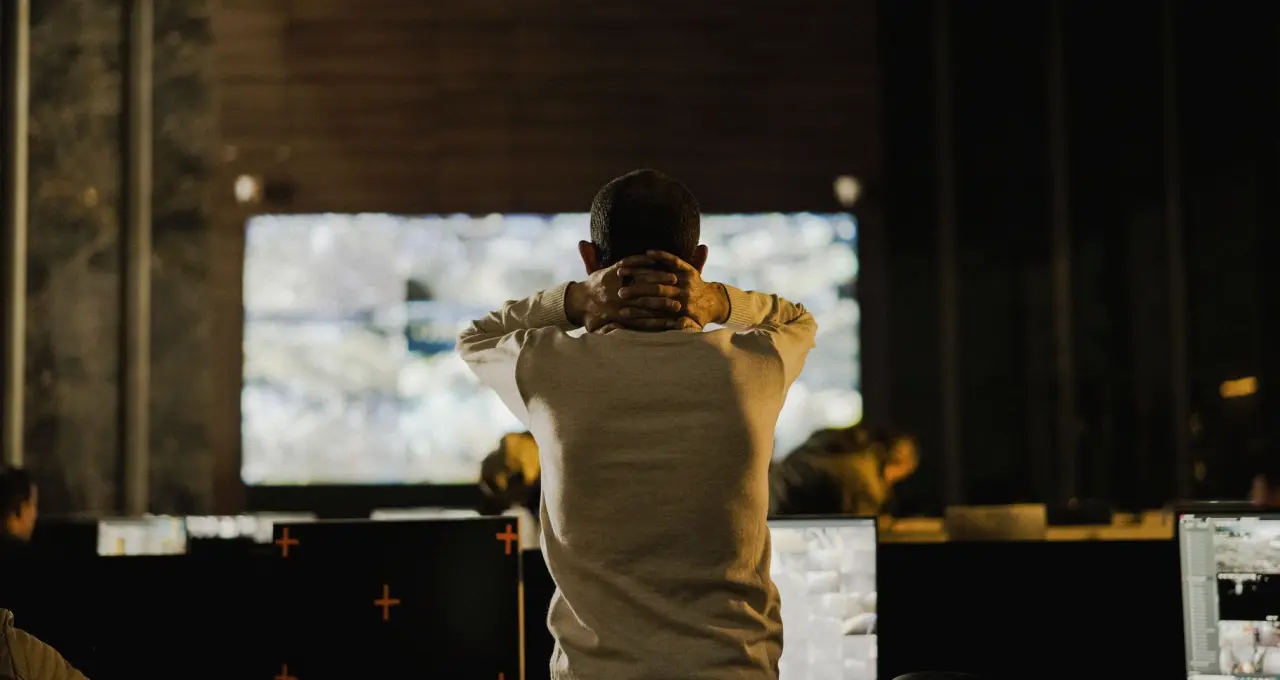
Why the autumn weeks suit a workflow review
Most production teams we speak to are in the same position in these weeks: the summer schedule is finished, the winter programming is about to fill every slot, and there is a short stretch in between when the gallery is quieter than usual. That gap is the best time to ask how content actually moves from camera to transmission, because once the schedule tightens, nobody has the hours to watch the process closely.
A written review is not a reaction to a failure. It is a calm record of what happens today, set down by someone who is not inside the daily routine. Habits that grew up around old equipment, a departed colleague or a one-off deadline tend to stay in place long after the reason has gone, and they are easy to miss when you are the one doing the work.
Mapping the path from camera to transmission
We begin by following a single piece of content through your facility, step by step. That means where the signal leaves the camera, how it is recorded or routed, who touches the file, where it is stored, how it is checked, and by what route it reaches the playout or the live feed. We write each hand-over down as it really happens, not as the procedure document says it should.
Often the map itself is the first useful result. Teams are frequently surprised to find two copies of the same material kept in different places, or a manual transfer that only one person knows how to perform. Drawing the path on paper, with names against each stage, makes these points visible without anyone needing to be blamed for them.
- Capture and ingest points, with formats and naming used
- Storage locations and who has access to each
- Checking and approval stages before transmission
What to gather before the review begins
The review goes faster and says more when we have a few documents in hand. You do not need to tidy anything first. Existing procedures, even out of date ones, are useful, because the gap between the paper version and the daily practice is often where the findings lie.
We also ask for a short conversation with the people who run the workflow day to day: the gallery operators, the media managers, the engineer on call. They know where the awkward moments come up, and they usually have a practical view of what would help. A review built only from managers' descriptions misses a good deal of this, so we try to hear from the people at each stage.
- Any written procedures, diagrams or run sheets in current use
- A list of the equipment and software involved in each stage
- Recent examples of delays, re-exports or missed hand-overs
- Names of the people responsible at each stage
Common weak points we look for
Certain patterns come up again and again, and we check for them as a matter of routine. Inconsistent file naming is one: when two editors label the same material differently, time is lost searching and mistakes creep in near transmission. Another is the single point of dependence, such as one workstation, one person or one cable run that the whole chain relies on without a fallback.
We also look at how problems are reported. If a fault is noticed at the last stage but caused at the first, the correction often arrives too late to help the programme in question. Short feedback routes between stages are cheap to set up and can save more time over a winter season than any new equipment purchase.
What the written review contains
You receive a document, not a presentation. It sets out the workflow as we found it, the points where time or quality is being lost, and a short list of changes put in order of how much effort each needs and how much difference it is likely to make. We keep the language plain so that it can be passed to colleagues who were not part of the conversations.
We do not recommend replacing systems unless the evidence clearly points that way. Many of the improvements are changes in sequence, naming, responsibility or checking, which cost very little. Where equipment does need attention, we say so and explain why, leaving the decision and the purchasing with you.
- A diagram of the current path from camera to transmission
- Findings grouped by stage, with the reasoning behind each
- A ranked list of changes, from quick adjustments to larger projects
Timing the changes around your schedule
Finding the problems is only half of it; the other half is choosing when to act on them. A change to file handling is best made while the schedule is light, so that the team can practise it before it matters. Altering a procedure in the week of a major live broadcast is rarely wise, however sound the idea.
For that reason we suggest agreeing a sequence with you: small adjustments in the coming weeks, anything needing training or testing before the busiest period, and larger decisions held until the new year when there is room to plan them properly. Settling this early keeps the winter calm and the changes understood.
A workflow review in mid autumn gives a production team a clear record of how its content really travels, at a time when there is still room to act on it. The aim is modest and practical: fewer surprises at transmission, less duplicated effort, and a team that knows where each hand-over sits. If you would like to talk about what a review would cover for your facility, you can reach us through the contact page.